
Electrical Transformers Explained and the Main Types That Keep Power Flowing
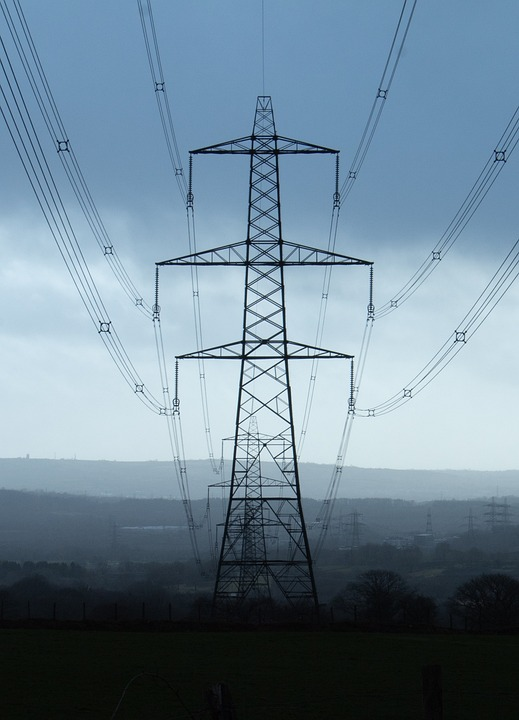
Power travels a long, hidden road before it reaches your home. Transformers make that road work. They push voltage up for the long haul, then bring it back down so it is safe to use. You rarely see them, but they touch everything you plug in. These days, engineers watch this hidden network on live dashboards, following a system that changes by the minute — much like sports fans who track a shifting postseason picture through live tools such as https://collegiatebaseball.com/college-world-series-bracket-breakdown-predictions.html, where each new result rewrites the story.
Why Transformers Quietly Run the Power You Depend On
Power leaves the plant at a very high voltage, because that is the cheapest way to move it far. Your lights and chargers need something much gentler. Transformers close that gap. They lift voltage for the journey and drop it for use, step by step, until the current is calm enough for a wall socket.
We almost never notice this work. A transformer has no moving parts to speak of. It gives off a soft hum and can run for decades. But cut one link in the chain, and a whole neighborhood goes dark. They stay invisible precisely because they are so dependable.
"A grid is only as reliable as its transformers," one veteran substation engineer noted. "People notice them the day one fails, and never a moment before."
That same dependability explains the money utilities pour into testing and upkeep. When one unit fails, the effect spreads quickly.
Inside the Core How a Transformer Moves Energy Between Circuits
The basic idea is simple. Two coils of wire sit side by side, wound around a shared iron core. Alternating current in the first coil builds a changing magnetic field. The core carries that field across to the second coil and stirs up a voltage there. The two sides never touch. Energy crosses through magnetism alone.
How much the voltage changes comes down to the turns in each coil. Add turns on the output side and the voltage rises. Use fewer and it drops. That single ratio is the whole trick, and it lets one simple design fill many roles.
A few core parts carry most of the load:
- The primary winding, which takes in the incoming current
- The secondary winding, which sends out the converted output
- A laminated iron core that guides the magnetic field
- Insulating oil or resin that cools and protects the windings
- A tank, bushings, and fittings that hold it all safely
Once this idea clicks, the different types of electrical transformers fall into place.
The Main Types of Electrical Transformers and Where Each One Belongs
Transformers do not all share the same job. Engineers pick a type to match voltage, place, and load. Some fill huge substations. Others hang on a pole near your street or hum inside a single machine.
Here are the families you are most likely to run into.
| Type | Main role | Typical setting | Voltage handling |
|---|---|---|---|
| Power transformer | Bulk transfer between grid stages | Generation and transmission | Very high |
| Distribution transformer | Final step-down to users | Streets and neighborhoods | Medium to low |
| Isolation transformer | Separates circuits for safety | Labs, hospitals, electronics | Low |
| Instrument transformer | Scales current or voltage for meters | Control and protection panels | Measured, not delivered |
Each family keeps its own pace. Power transformers handle massive loads but rarely change state. Distribution units run all day at a smaller scale. A good match keeps the whole system efficient and safe.
From Substations to the Factory Floor Industrial Transformers Up Close
Industry pushes its gear harder. Factories pull heavy, uneven loads, and a halted line burns money by the minute. Industrial electrical transformers are made for that strain. They use tougher cores, stronger cooling, and ratings picked for hard, steady duty.

Their care also differs. A plant cannot pause for a tidy maintenance window, so the work usually happens on site, around the shift. Oil tests, winding checks, and thermal scans all catch trouble before it grows.
"In a factory, you maintain the transformer around production, not the other way around," a maintenance lead once put it. "The machine sets the clock."
A few warning signs tell technicians a unit needs care soon:
- A steady climb in operating temperature
- Insulating oil that turns dark or acidic
- Unusual humming or vibration
- Tripping with no clear outside cause
- Moisture or residue gathering around the bushings
Watching these details pays off with fewer shocks. Catch a small drift early, and you often avoid a long, costly outage.
Watching the Grid in Real Time How Digital Tools Changed Monitoring
For most of their history, crews checked transformers by hand on a set schedule. That is no longer the norm. Sensors now track temperature, load, and oil condition around the clock, and software turns those readings into a live view of the whole network.
The change from the old way is striking.
| Aspect | Manual checks | Live monitoring |
|---|---|---|
| Timing | Fixed schedule | Continuous |
| Data | Snapshot readings | Ongoing stream |
| Response | After a problem | Before a fault |
| Coverage | One unit at a time | Whole network |
This gives operators something they never had: foresight. Trends that once hid between inspections now show up as they happen, and a slow shift can raise a quiet alert long before it turns into a fault. The same hunger for live data shows up well beyond power, in logistics, weather, and sport. For transformers, a once-hidden machine has finally become visible, and far easier to trust.
Transformers will never look glamorous, and that is the point. They do steady, repeatable work that keeps everything else running. Learn the basic idea, the main types, and the demands of industrial duty, and a mysterious gray box turns into something you understand. The next time the lights hold through a storm, you will know which quiet machines earned the credit.
Back to all articles